
Your Position: Home - Formwork - Advantages and Disadvantages of Steel and Timber Formwork
In any construction project, formwork plays a vital role. Whether it is made of steel, timber, or other materials, it serves as a temporary mold that allows freshly poured concrete to take its required shape. Once hardened, the concrete gains sufficient strength to remain in position, making formwork an essential part of building work.
Both timber and steel are widely used in construction as formwork materials. Each offers a reliable working surface but comes with its own benefits and limitations. This article explores the pros and cons of both options.
Advantages of Timber Formwork
Highly adaptable and flexible, suitable for different structural requirements.
Provides good thermal insulation, which helps protect concrete in colder climates.
Lightweight, making it easy to transport, assemble, and handle on site.
Simple to dismantle after use.
Does not require highly skilled labor for installation.
Damaged components can be quickly replaced without affecting the entire system.
Disadvantages of Timber Formwork
Limited lifespan, with a reuse capacity usually ranging from only 4 to 6 cycles.
If the wood is too dry, it can absorb water from fresh concrete, reducing the overall strength of the structure.
Timber with high moisture content (above 20%) may warp or shrink when in contact with wet concrete, leading to cracks, gaps, and leakage of slurry.
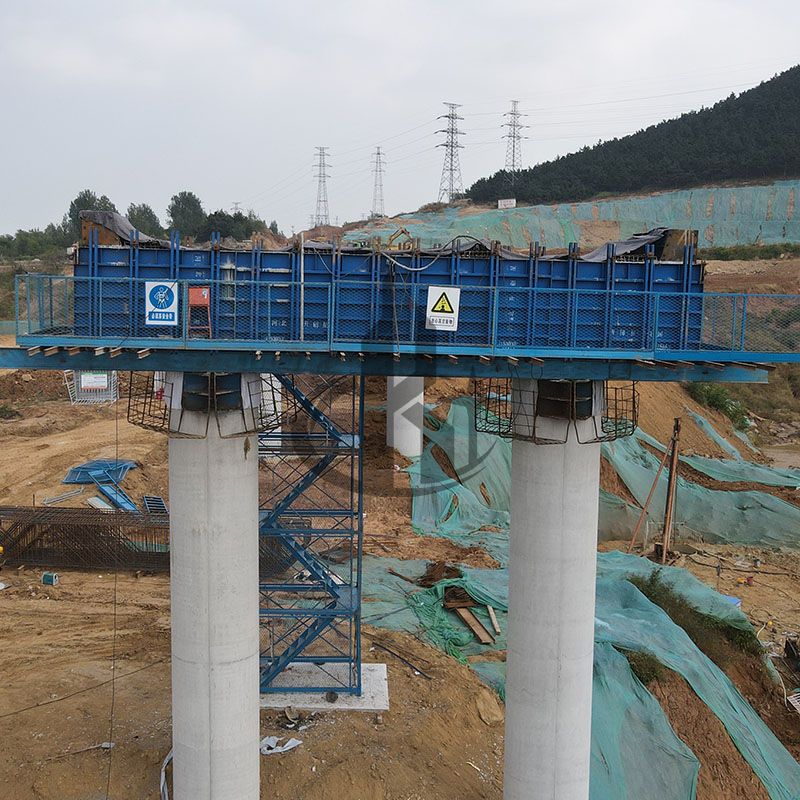
Steel formwork is often chosen for larger projects due to its durability and strength. While it comes at a higher cost, it offers far more reusability than timber. Its ability to withstand heavy loads makes it a preferred choice for large-scale construction activities.
Advantages of Steel Formwork
Very strong and capable of bearing heavy structural loads.
Easy to assemble and secure during installation.
Provides uniform dimensions and smooth surfaces for accurate concrete finishing.
Can be reused multiple times, offering long-term value despite higher upfront cost.
Disadvantages of Steel Formwork
More expensive compared to other materials.
Limited flexibility in terms of sizes and shapes.
High thermal conductivity can lead to heat loss during curing.
Smooth surfaces may create difficulties in achieving proper finishing without additional treatment.
What are the most common materials for formwork?
Formwork is usually made from timber, steel, plywood, or aluminum. Among these, steel is often considered the most durable and long-lasting option.
What is steel formwork?
Steel formwork consists of metal panels connected with rods or fasteners to create a mold for concrete. It is frequently applied in projects of various scales, including commercial buildings, bridges, dams, and tall structures. In addition to being strong and resistant, it can also be dismantled and reused multiple times, making it a cost-effective solution in the long run.
What are the benefits of formwork in construction?
Formwork is essential for reducing project costs, minimizing construction time, and ensuring safety on site. By providing accurate shaping and structural support during curing, it helps improve both efficiency and quality in building projects.
14
0
0

Comments
All Comments (0)